VH2C Business Consulting & Technology | www.vh2c.com.br
How the process governance method connects short-term efficiency to long-term viability.
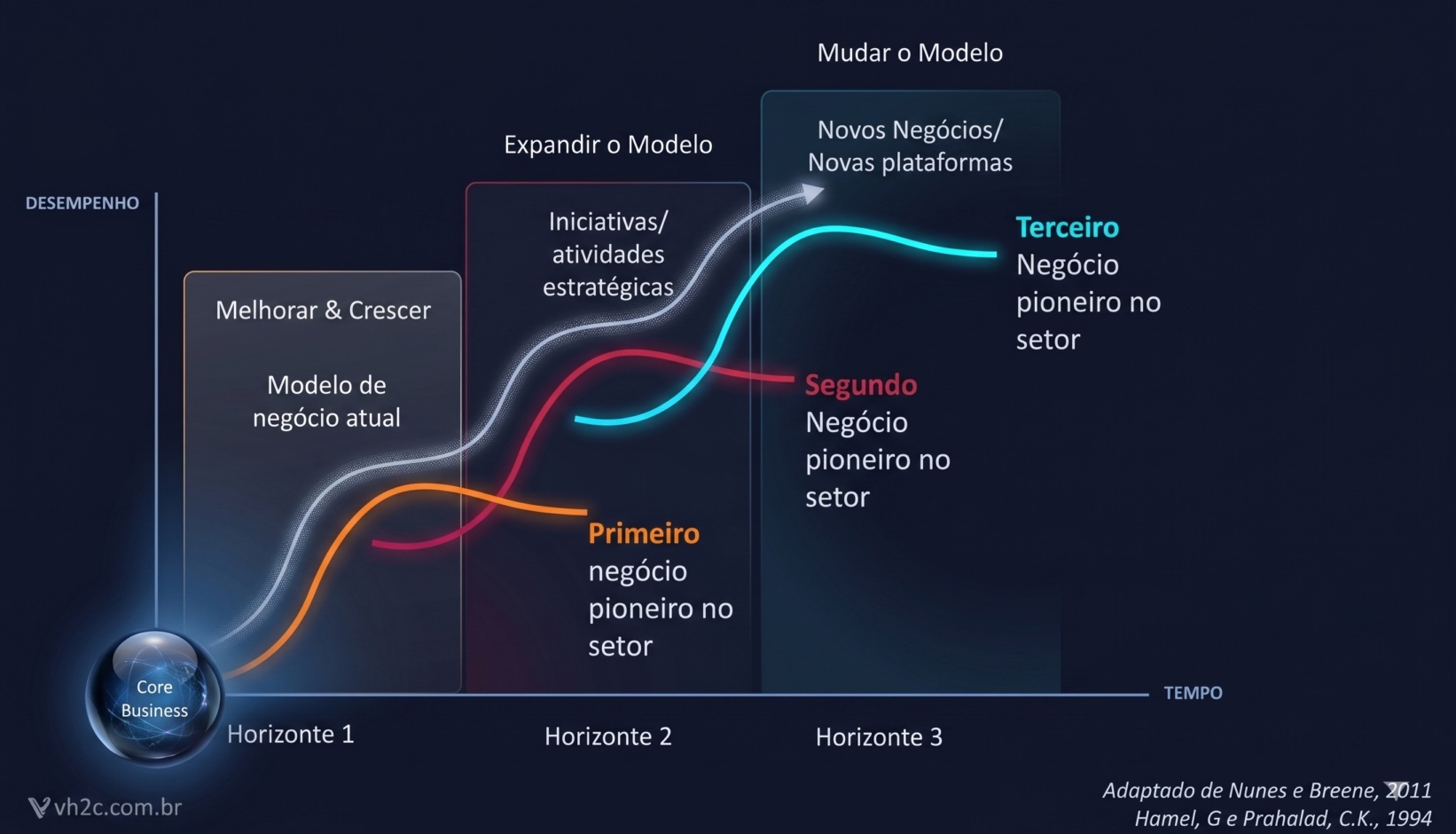
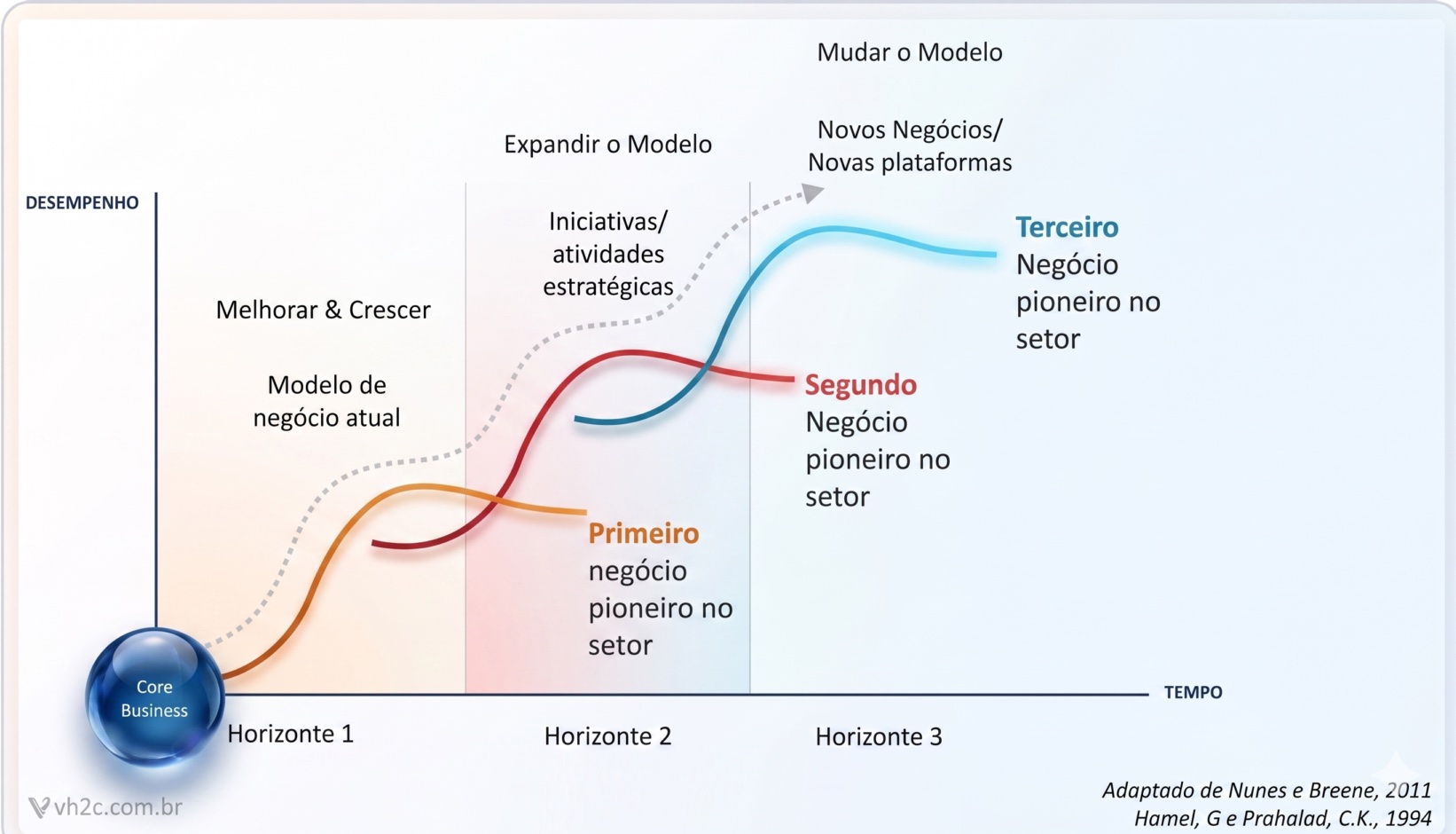
In the contemporary business scenario, companies face a relentless challenge: to keep current operations highly profitable, optimized, and controlled while simultaneously exploring new business models, disruptive technologies, and innovative markets. It is the classic conflict between the urgency of the present and the viability of the future.
The dilemma is not new. In fact, most corporate downfalls occur because leaders focus excessively on today's cash cow (their existing core processes) and ignore market warning signs until they are disrupted. Conversely, companies that burn cash on innovation without operational discipline and stable margins collapse before their strategy bears fruit.
In this article, we will explore how we structure organizations to run both operational efficiency (Exploitation) and strategic innovation (Exploration) through twin, self-sustaining loops that ensure longevity and business value.
To understand ambidexterity, it is necessary to analyze its two driving forces. These represent distinct organizational mentalities, cultures, and structures, yet they must coexist under the same roof:
Focus on short-term efficiency, control, and incremental improvement. It is the operation of existing processes, aiming to reduce variances, eliminate waste, increase productivity, and maximize margins from current products and services.
Focus on strategic innovation, flexibility, and adaptation. It is the search for new knowledge, radical technologies, alternative markets, and business models that do not exist yet, aiming to guarantee tomorrow's viability.
Operating in Exploitation requires alignment, discipline, and standardization (such as Six Sigma and BPM). Operating in Exploration requires experimentation, trial and error, and adaptability (such as Agile and Design Thinking). Balancing them is the secret to organizational durability.
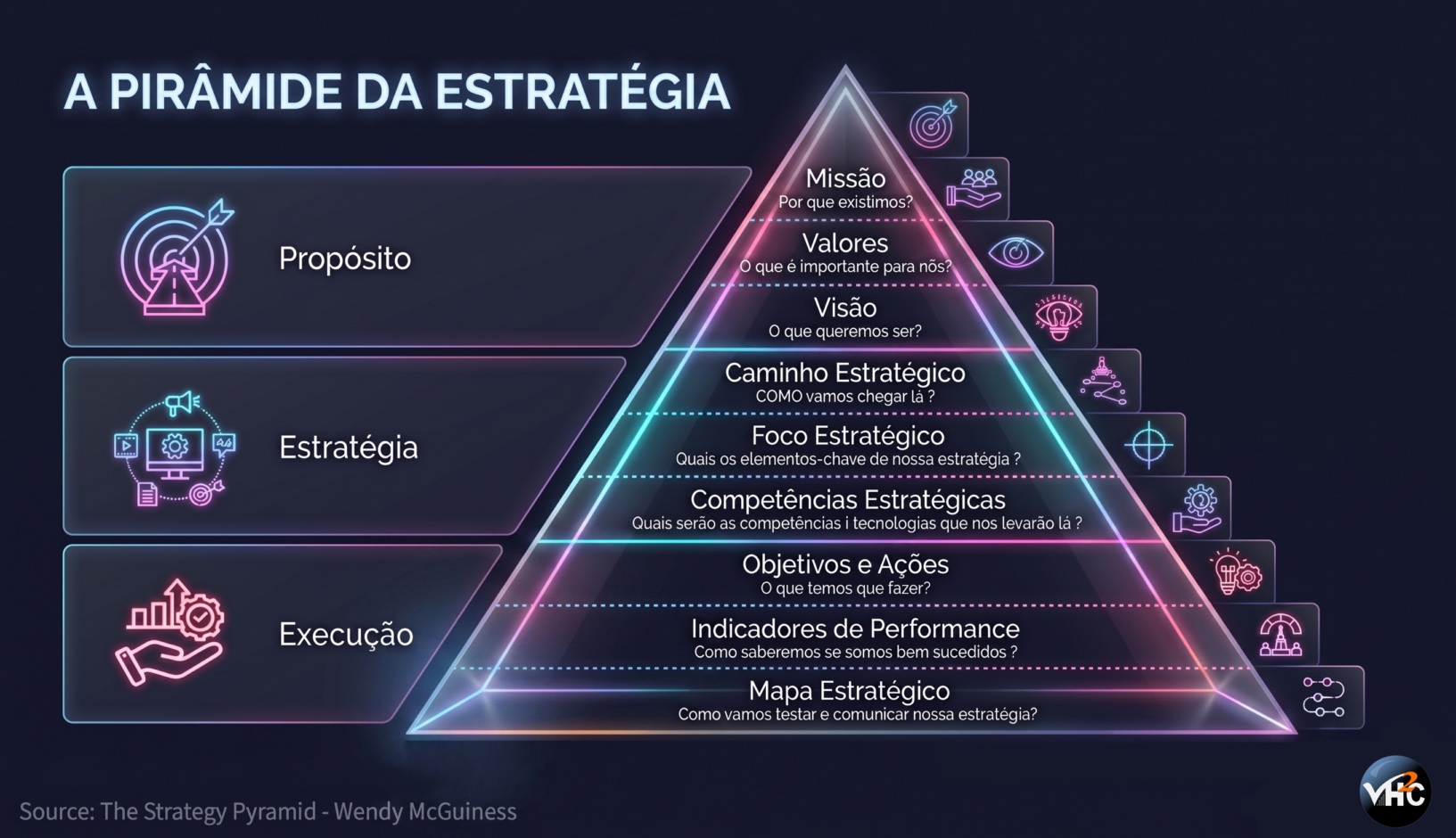
The main challenge of organizations is not to design the strategy. Rather, it is the execution: connecting high-level strategic objectives (Exploration) to the daily work of operational employees (Exploitation). When there is a gap between these two layers, the organization suffers from double blindness: the board does not know what is happening in operations, and operational teams do not understand the company's direction.
Governance by processes solves this problem by turning abstract strategy into concrete workflows. It translates strategic indicators (e.g., market share, innovation revenue) into process metrics (KPIs) and operational routines.
Our method structures the organization through two integrated loops that feed and support leadership decision-making:
Monitors day-to-day operations through tactical indicators. Process deviations trigger the Continuous Improvement Plan, while performance interviews help adjust operational training and human capital incentives.
Guided by the strategic plan and shareholders' budget. It drives the Strategic Action Plan (Investments, strategic recruitment, future-skills training) to bridge the gap between what the company is today and what it must become tomorrow.
The table below summarizes the key attributes of the two forces of Organizational Ambidexterity:
| Dimension | Exploitation (Operational Efficiency) | Exploration (Strategic Innovation) |
|---|---|---|
| Strategic Horizon | Short term (1 to 2 years) | Medium/Long term (3 to 5+ years) |
| Primary Goal | Refinement, efficiency, and margins | Innovation, new products, and markets |
| Primary Risk | Obsolescence due to market disruptions | High cost, uncertainty, and cash burn |
| Metric System | Tactical KPIs (cycle time, unit cost, defects) | Progress Indicators (OKRs, milestone completion) |
| Cultural Style | Discipline, alignment, and standardization | Flexibility, autonomy, and learning |
Use the interactive panel below to simulate the balance between Exploitation and Exploration inside a business. Move the sliders to test the results of resource allocation during a 5-year industry stress test:
Process governance bridges the forces of the short and long term through two integrated loops. The generated outputs nourish and sustain leadership decisions:
Operates through the daily execution of processes and tracking via KPIs. In each cycle, performance deviations guide the investment priorities of the Continuous Improvement Plan. At the same time, individual performance reviews serve to adjust the internal training plan and the current positions and salaries plan, adapting and motivating the operational staff.
Operates through the strategic vision formulated in strategic planning, from which we define the budget (Business Plan / Budget) approved by shareholders. This Business Plan generates the Strategic Action Plan, containing all the actions and investments necessary to close the gaps between the company as it exists today and what it must become tomorrow. This plan is divided into:
Thus, while monitoring day-to-day work through Performance Indicators (tactical metrics of today), the strategic transition is evaluated by Progress Indicators (strategic metrics of the future).
The most valuable asset of any organization is human capital. The key differentiator of the method proposed by VH2C is ensuring that both today's efficiency efforts and tomorrow's innovation projects are fully integrated into the employees' daily routines. The goal is to make sure your company is ready for the future – body and soul!
Vitor Hugo de Castro Cunha
Senior Executive - VH2C Business Consulting